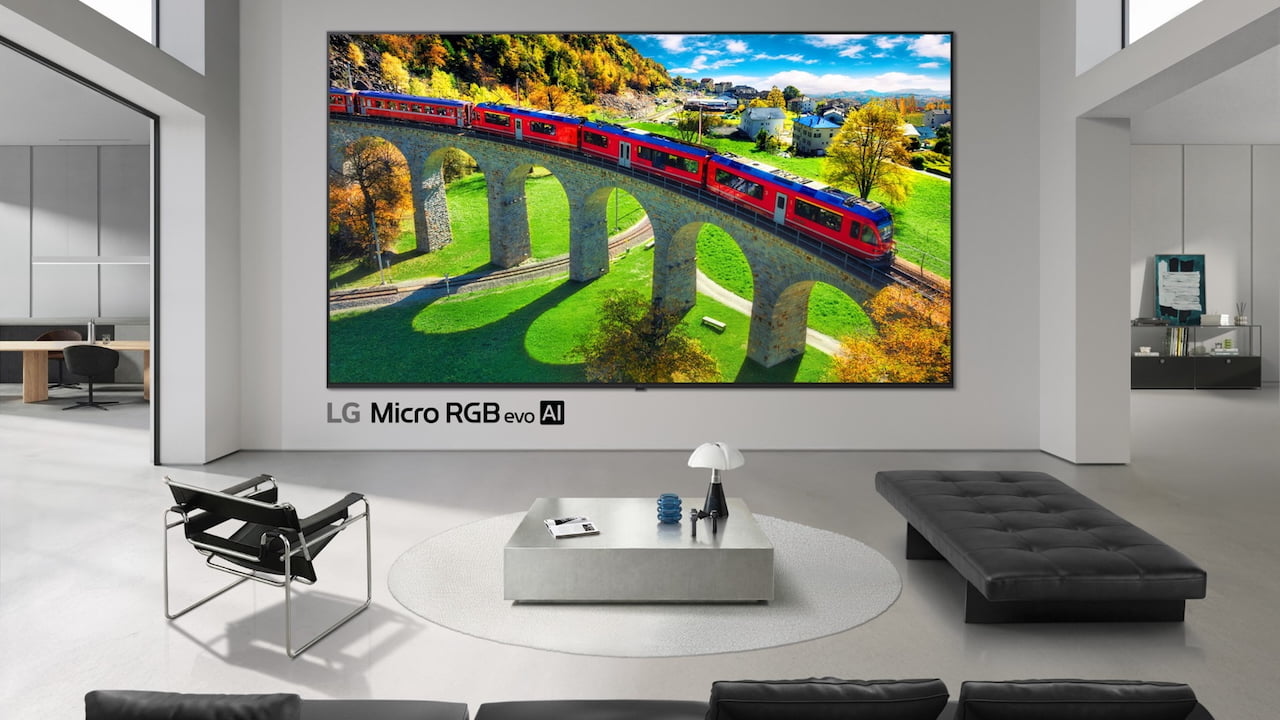
Ahead of CES 2026, LG Electronics has confirmed it will unveil the LG Micro RGB evo MRGB95B 4K TV, a rare and telling detour from the company’s OLED-first playbook. Although we still expect another OLED refresh, LG is rolling out high-end LCD-based TVs built around Micro RGB technology, signaling that the display arms race is no longer a single-track OLED story. The MRGB95B isn’t about abandoning OLED—it’s about expanding the battlefield, and LG clearly doesn’t intend to watch rivals define the next phase of premium LCD TVs from the sidelines.
What Micro RGB Is
RGB-MiniLED and Micro RGB LED technologies aim to push LCD TV performance well beyond conventional implementations by ditching traditional white or blue LED backlights in favor of individually controlled red, green, and blue LEDs, arranged in mini- or micro-scale arrays. The goal isn’t subtle: higher color purity, improved brightness control, and fewer compromises baked into the LCD backlight stack—because if you’re going to keep LCD relevant at the high end, the light source has to stop being the weakest link.
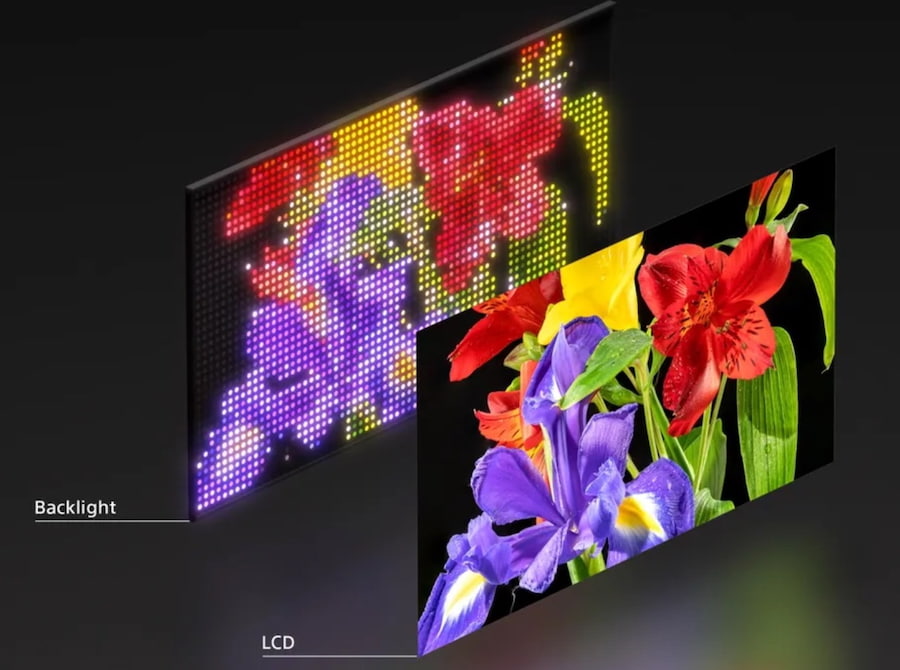
Pro tip: RGB-MiniLED relies on LEDs measuring roughly 100–200 micrometers (μm), while Micro RGB LED pushes the concept further with sub-100 μm LEDs packed into far denser arrays. Both approaches represent a meaningful leap for LCD TV performance, but Micro RGB goes the furthest—promising higher color accuracy, wider contrast control, and the ability to eliminate color filters or Quantum Dot layers altogether.
In short, it’s LCD without the usual optical crutches. For the deeper dive (and the inevitable “wait, what?”), see our companion article: WTF Are RGB-MiniLED and Micro RGB LED TVs?
LG’s Micro RGB Strategy
Building on more than a decade of OLED TV development, LG claims its Micro RGB evo approach pushes LCD-based Micro RGB technology further than current implementations—a not-so-subtle shot across the bow at rivals who have dominated premium LCD narratives. The MRGB95B reportedly carries over 13 years of OLED-era precision, applying that know-how to a very different display architecture rather than starting from scratch.
At the center of that effort is LG’s Dual AI Engine–based α (Alpha) 11 AI Processor Gen 3, which introduces Dual Super Upscaling capable of processing two distinct AI upscaling tasks simultaneously. The aim is straightforward and measurable: improved sharpness without the usual side effects, paired with more natural, balanced imagery that prioritizes clarity and immersion over the kind of showroom tricks that rarely survive long-term viewing.
The processor also unlocks RGB Primary Color Ultra, which LG describes as a key advance in achieving full-spectrum color reproduction with Micro RGB backlighting. According to LG, this implementation enables the Micro RGB evo MRGB95B to reach an unusually broad color range, earning Intertek certification for 100 percent color gamut coverage across BT.2020, DCI-P3, and Adobe RGB—the theoretical ceiling for current video and imaging standards. On paper, that places color accuracy front and center rather than treating it as a secondary benefit.
Backing up that color performance is Micro Dimming Ultra, LG’s precision local-dimming system designed to manage over 1,000 independently controlled dimming zones. The goal is clear and measurable: tighter brightness control, higher contrast, and more precise color handling, allowing fine detail to remain visible in both shadow-heavy scenes and high-brightness highlights—areas where even premium LCD TVs typically start to show their limits.
WebOS
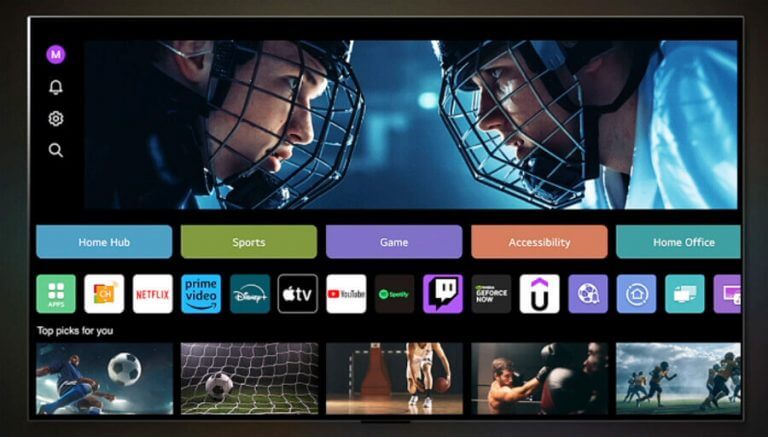
Beyond raw picture performance, LG is extending its AI push into the overall user experience. The Micro RGB evo MRGB95B runs on LG’s webOS platform, which emphasizes personalization through features such as Voice ID, AI Picture Wizard, AI Sound Wizard, and a customizable “My Page” home screen that adapts to individual viewing habits rather than treating everyone in the household the same.
LG is also upgrading its on-platform assistance tools with an enhanced AI Concierge, AI Chatbot, and AI Search, all designed to make content discovery and system navigation less friction-heavy. The promise here isn’t flashy demos, but practicality—helping users surface relevant content, settings, and contextual information more efficiently, without turning the TV interface into yet another obstacle between the viewer and the screen.
From Park Hyoung-sei, president of the LG Media Entertainment Solution Company: “Achieving the utmost visual fidelity is the goal of any display, and with the LG Micro RGB evo, we have achieved a milestone previously thought impossible for this category,…This launch marks the evolution of the RGB TV, redefining industry standards to offer uncompromising performance for customers who demand exceptional color accuracy.”
The Bottom Line
2026 is shaping up to be a breakout year for TVs using micro or mini RGB TV technology, now that the top four TV manufacturers have embraced it. The first of such models debuted in late 2025 from Hisense, TCL, and Samsung, and we expect more to be on the way.
What’s particularly telling is LG’s size strategy. Instead of chasing bragging rights with a 115-inch-plus monster, LG is starting at 75 inches, signaling a more pragmatic approach aimed at real-world living rooms rather than billionaire basements. It suggests LG sees Micro RGB not as a halo-only science project, but as a premium LCD technology that could scale downward—and actually sell—if the performance lives up to the claims.
Also, Sony has been working a new RGB LED blacklight system that may or may not fall into the Mini LED RGB or Micro RGB camps, but they have not released a production model at this point.
Keep in mind that OLED TV technology is still the only TV tech that can display absolute black and achieve wide viewing angles without color/contrast fading; the Mini LED RGB and Micro RGB come really close.
Also, don’t get these technologies confused with Micro LED, which eliminates the need for backlighting and an LCD panel altogether.
Availability
The LG Micro RGB evo MRGB95 series will launch in 100-inch, 86-inch, and 75-inch sizes, with pricing, release timing, and full specifications still under wraps—likely to be clarified during or shortly after CES 2026. LG will showcase the 100-inch MRGB95B on the CES show floor (Booth #15004, Las Vegas Convention Center), and that flagship model has already secured a CES 2026 Innovation Award, lending early credibility to the concept.