
Introduction
Nearly every TV and audio brand now sells a soundbar, and nearly all of them swear they deliver “Dolby Atmos.” The problem? Slapping an Atmos logo on a slim black plank doesn’t magically create height, scale, or immersion. When a two-channel bar with a couple of angled drivers calls itself Atmos, the term starts to feel less like a standard and more like a marketing clearance rack.
We tested a pile of soundbars this year, and most of them didn’t survive first contact. Yes, they all supported Dolby Atmos. No, that didn’t make them good. Audiophiles have long distrusted soundbars for a reason, and if one is going to earn a spot on this list, it has to clear a high bar: something we’d actually recommend to non-audiophile friends without apologizing later. That’s a tougher test than it sounds—and it’s exactly why this year’s list is short. Some models missed the cut simply because we haven’t heard them yet. The rest? Let’s just say the Atmos badge didn’t save them.
Why Should You Buy a Soundbar?
The case for a soundbar is refreshingly straightforward: modern TVs look incredible and sound terrible. Ultra-thin panels leave zero room for real speakers, so a soundbar steps in to do the one job your TV can’t—deliver audio that doesn’t feel like it’s coming from a laptop. Placed directly under (or in front of) the screen, a soundbar immediately improves dialogue clarity, scale, and overall presence without turning your living room into a wiring project.
Soundbars also win on convenience. Setup is usually painless—plug in power, run a single HDMI cable from the TV’s ARC or eARC port to the soundbar, and you’re off. Most TVs automatically detect the bar and route audio without drama. Instant home theater? Sometimes. Whether it actually sounds like one depends on what’s inside the box. Driver quality, the number and orientation of speakers, and available amplifier power matter more than the logo on the grille. DSP, room correction, and virtual surround processing can help—or hurt—depending on execution. Add-on wireless surrounds and subwoofers can push things further, delivering real impact instead of wishful thinking. Like everything in audio, the idea is simple; the results depend entirely on how well it’s executed.
The Best Soundbars of 2025
Sonos Arc Ultra ($2,956)

Sonos has dominated the soundbar category for most of the last decade, and not by accident. Its bars are easy to live with, easy to set up, and—crucially—actually sound good. Add seamless integration with Sonos’ whole-home ecosystem, and it’s no surprise the brand keeps showing up in living rooms that would never tolerate a rack of separates.
The Sonos Arc Ultra works perfectly well as a standalone soundbar, but the real story is the Ultimate Immersive Set, which adds a pair of Era 300 surround speakers and the Sub 4 wireless subwoofer. The Arc Ultra on its own runs $1,099; the full system pushes close to $3,000. That’s not pocket change, but Sonos doesn’t force you into a one-shot purchase—you can build the system over time, which matters.
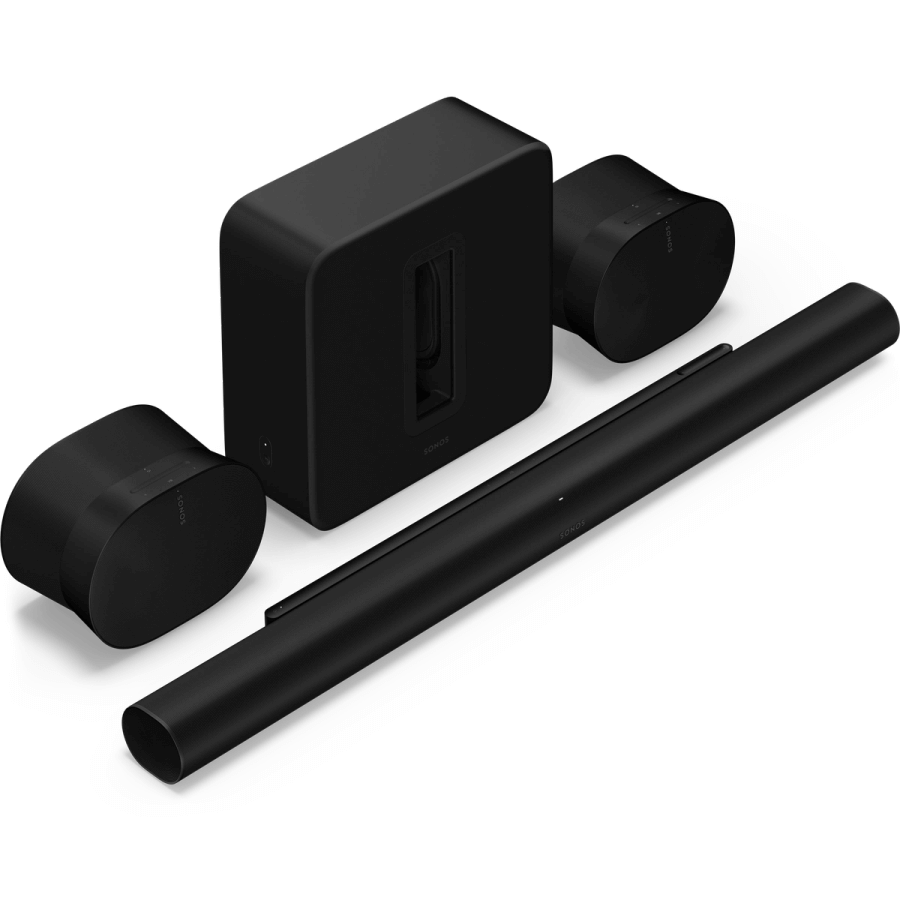
If you’re asking for the ideal configuration, yes—we’d recommend the whole package. As eCoustics contributor and CI expert John Sciacca put it: “This combo produced some of the most immersive, exciting, and compelling surround sound I’ve ever heard from a soundbar system.” That’s not faint praise coming from someone who installs rather complicated and expensive home theaters for a living.
Under the hood, Sonos leans heavily into its proprietary tech. The Arc Ultra packs 14 drivers into the bar itself, with upward-firing drivers in both the bar and the Era 300 surrounds to deliver legitimate height effects. The Sub 4 integrates cleanly, adding deep, controlled low-frequency weight without drawing attention to itself—a harder trick than it sounds.
Then there’s Trueplay, built into the Sonos app, which automatically tunes the entire system to your room. The improvement isn’t subtle, and the setup process is about as frictionless as it gets in home audio. For listeners who want immersive, convincing surround sound without turning setup into a second job, the Sonos Arc Ultra delivers the full package—convenience, polish, and performance that actually lives up to the hype.
$2,956 $2,396 at Sonos | Crutchfield
Canvas HiFi ($4,999)
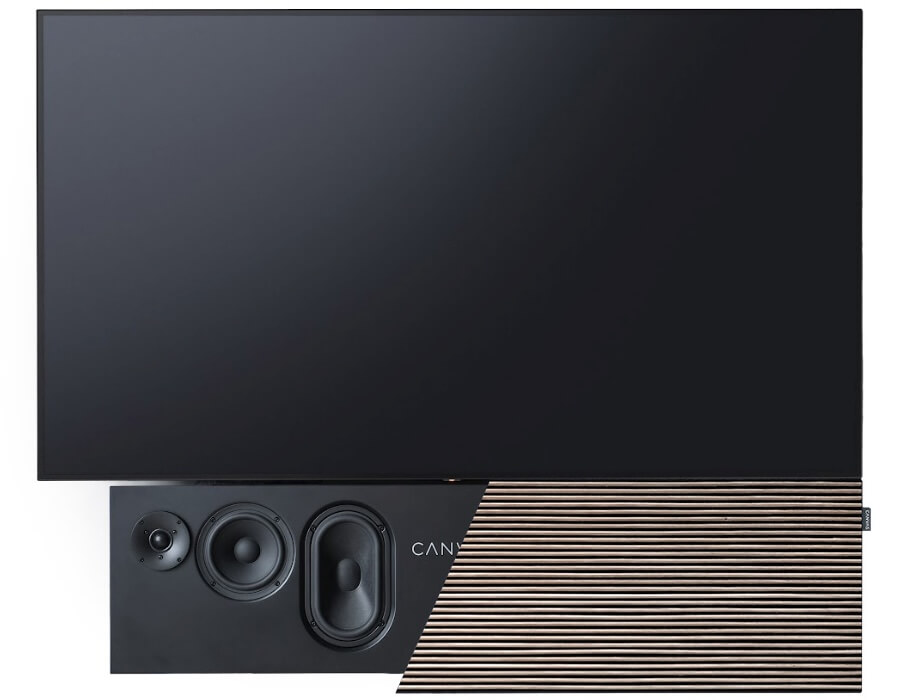
No product in 2025 has impressed us more. Full stop. The Canvas HiFi is the only Editors’ Choice winner this year to take top honors across two categories—soundbars and wireless speakers—while also racking up multiple eCoustics “Best in Show” awards at CES and T.H.E. Show. That doesn’t happen by accident.
On paper, Canvas HiFi is a soundbar with an integrated TV stand and mounting system. In reality, that description sells it short—by a lot. Danish build quality is exceptional, and its sonic performance outclasses every standalone soundbar we’ve heard. It’s not close. The soundstage is so expansive and convincing that you’ll swear there are extra speakers hiding somewhere in the room. There aren’t. Despite all that scale and theatricality, dialogue remains locked dead-center and crystal clear, and the system somehow delivers genuinely chest-punching bass down to 30Hz—without the help of a subwoofer. One box. No compromises.
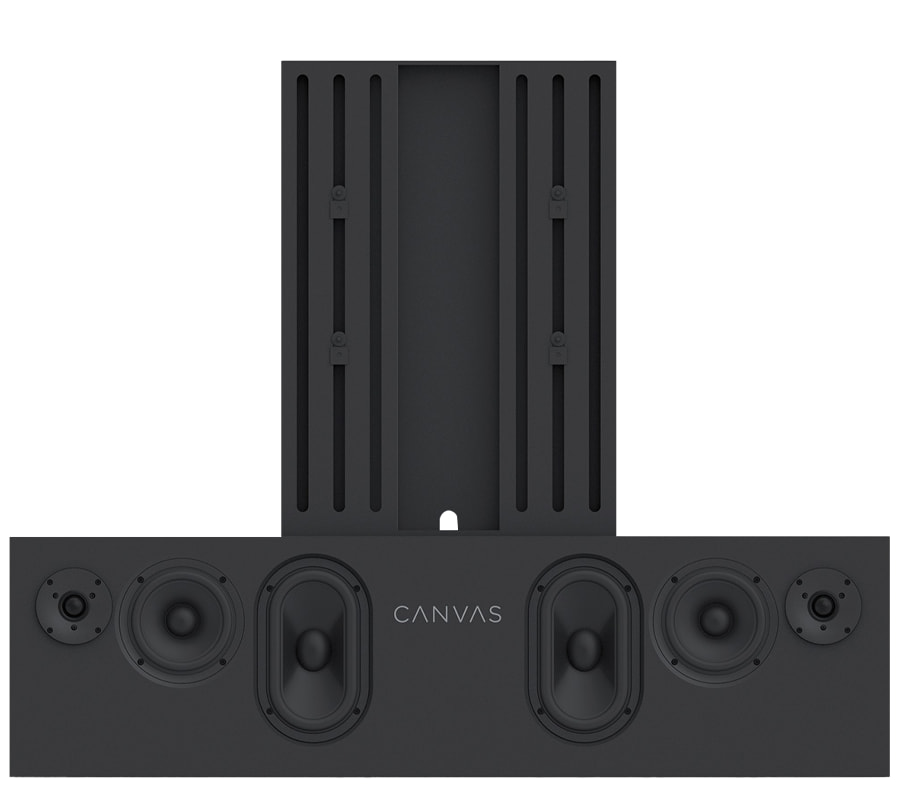
The magic ingredient is Bacch 3D processing, a technology designed to replicate how humans naturally perceive and locate sound in space. Bacch 3D has lived in research labs for years, more theory than product—until now. Canvas HiFi isn’t just one of the first consumer speakers to integrate it; it’s also the most accessible entry point into that technology to date.
This isn’t new or untested ground for us, either. Senior members of the eCoustics team—including Editor-in-Chief Ian White and Editor-at-Large Chris Boylan—have experienced Bacch 3D firsthand through its various stages of development, including early demonstrations in the Princeton University lab in New Jersey where the technology was originally conceived. Canvas HiFi is the first time that research has been translated into a consumer product that actually delivers on its promise.
Bottom line: if you’re shopping for a soundbar—or even a high-performance wireless speaker—Canvas HiFi isn’t just the best option we heard this year. It’s the one to beat.
The Bottom Line
Soundbars promise a lot in 2025, but very few deliver anything close to real home-theater sound. Most lean heavily on logos, buzzwords, and “Atmos” marketing while falling short on scale, clarity, and credibility. The models that made this list earned their place by doing something harder: sounding convincing, staying easy to live with, and delivering real immersion without turning setup into a science project. From Sonos’ fully realized ecosystem approach to Canvas HiFi’s genuinely disruptive Bacch 3D implementation, these are the rare soundbars we’d recommend without hesitation—even to people who usually don’t trust soundbars. The list is short for a reason, and that’s not a flaw. It’s honesty.