
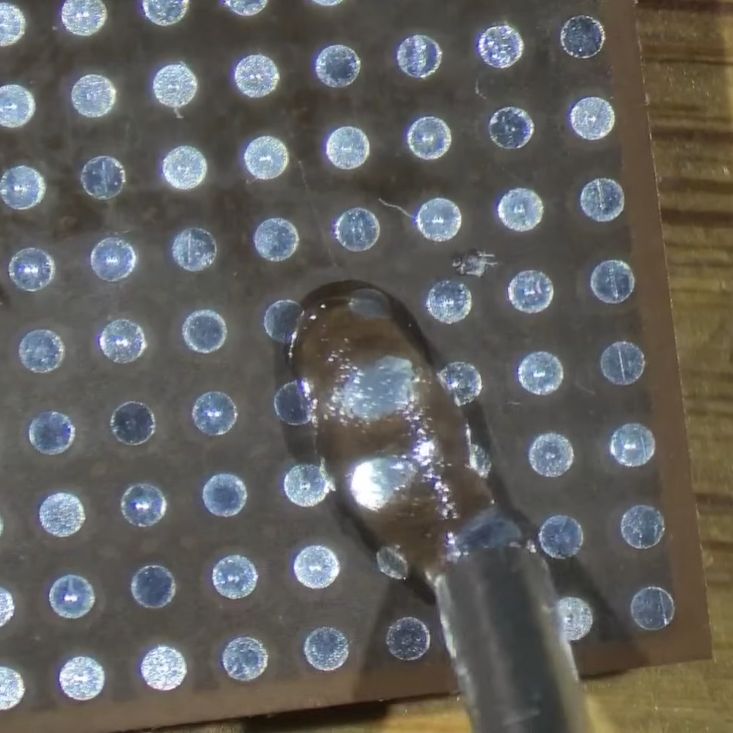
Flux is one of those things that you cannot really use too much of during soldering, as it is essential for cleaning the surface and keeping oxygen out, but as [Bits und Bolts] recently found, not all flux is made the same. After ordering the same fake Amtech flux from the same AliExpress store, he found that the latest batch didn’t work quite the same, resulting in a Geforce 2 GTS chip getting cooked while trying to reball the chip with uncooperative flux.
Although it’s easy to put this down to a ‘skill issue’, the subsequent test of eight different flux pastes ordered from both AliExpress and Amazon, including — presumably genuine — Mechanic flux pastes with reballing a section of a BGA chip, showed quite different flux characteristics, as you can see in the video below. Although all of these are fairly tacky flux pastes, with some, the solder balls snapped easily into place and gained a nice sheen afterwards, while others formed bridges and left a pockmarked surface that’s indicative of oxygen getting past the flux barrier.
Not all flux pastes are made the same, which also translates into how easy the flux remnants are to clean up. So-called ‘no clean’ flux pastes are popular, which take little more than some IPA to do the cleaning, rather than specialized PCB cleaners as with the used Mechanic flux. Although the results of these findings are up for debate, it can probably be said that ordering clearly faked brand flux paste is a terrible idea. While the top runner brand Riesba probably doesn’t ring any bells, it might be just a Chinese brand name that doesn’t have a Western presence.
As always, caveat emptor, and be sure to read those product datasheets. If your flux product doesn’t come with a datasheet, that would be your first major red flag. Why do we need flux? Find out.


